Most people don’t begin by wondering whether they need a tooth removed. They tell us the pain kept them awake, their cheek became swollen, or a cracked tooth suddenly became impossible to ignore.
If you’ve found yourself searching “emergency tooth extraction near me,” you probably don’t have much room left for uncertainty. You want to know what’s causing the pain or what the next step should be.
One thing we tell patients is that severe pain doesn’t automatically mean a tooth has to come out. Before we recommend any treatment, we want to understand what’s causing the problem and whether the tooth can still be saved.
Not every toothache requires an extraction, but severe pain, uncontrolled bleeding, swelling, or facial injury warrants prompt evaluation, as these may signal a problem that can worsen if left untreated.
In this guide, we’ll explain when urgent care is appropriate, what happens during an emergency visit, and how we determine whether a tooth can be saved.
What Counts as a Dental Emergency?
Patients often ask whether every painful tooth is an emergency. Usually, it isn’t.
Dental emergencies include:
- Severe persistent pain
- Facial or jaw swelling
- A dental abscess
- A broken tooth with exposed nerve tissue
- Trauma
- A loose adult tooth
- Bleeding that will not slow
Urgent does not always suggest extraction. Diagnosis matters before any decision. Depending on the findings, we may recommend drainage, medication, stabilization, root canal treatment, or extraction.
Warning Signs You Should Not Wait On
Some symptoms deserve more immediate attention than others. Seek prompt evaluation if you experience:
- Severe throbbing pain
- Pain spreading to the ear or jaw
- Fever
- Swelling of the face or neck
- Pus or drainage
- A persistent bad taste
- Difficulty opening your mouth
- Trouble swallowing or breathing
Pain can have many causes. When swelling develops as well, the concern shifts to whether an infection or significant inflammation may be present and needs prompt evaluation.
Also, breathing or swallowing difficulty is not a wait-and-see symptom and requires immediate emergency medical care.

When Should You Search for ‘Emergency Tooth Extraction Near Me’?
If pain continues to worsen, swelling develops, a tooth breaks below the gumline, drainage appears, a tooth becomes loose, or medication no longer helps, an urgent examination is appropriate.
The sooner the source is identified, the more options we usually have.
A nearby specialist can also make urgent care feel more controlled by simplifying follow-up and recovery.
Tooth Abscess, Infection, and Swelling
A dental abscess is a bacterial infection that develops around the tooth root or surrounding gum tissue.
Antibiotics may calm symptoms, but source control is often what resolves the problem.
Depending on the condition of the tooth, treatment may involve drainage, root canal therapy, extraction, or a staged treatment plan.
Infection changes the timeline because waiting can limit safer choices.
Emergency Oral Surgeon Near Me vs. the ER
The right first stop depends on whether the problem is local or medically urgent.
Localized tooth pain, fractures, and abscesses without airway symptoms are generally best evaluated by an oral surgeon.
Difficulty breathing, rapidly spreading facial swelling, high fever, or significant trauma require emergency medical care first.
Even after hospital treatment, the dental source usually still needs specialist care.
What Happens During an Urgent Evaluation?
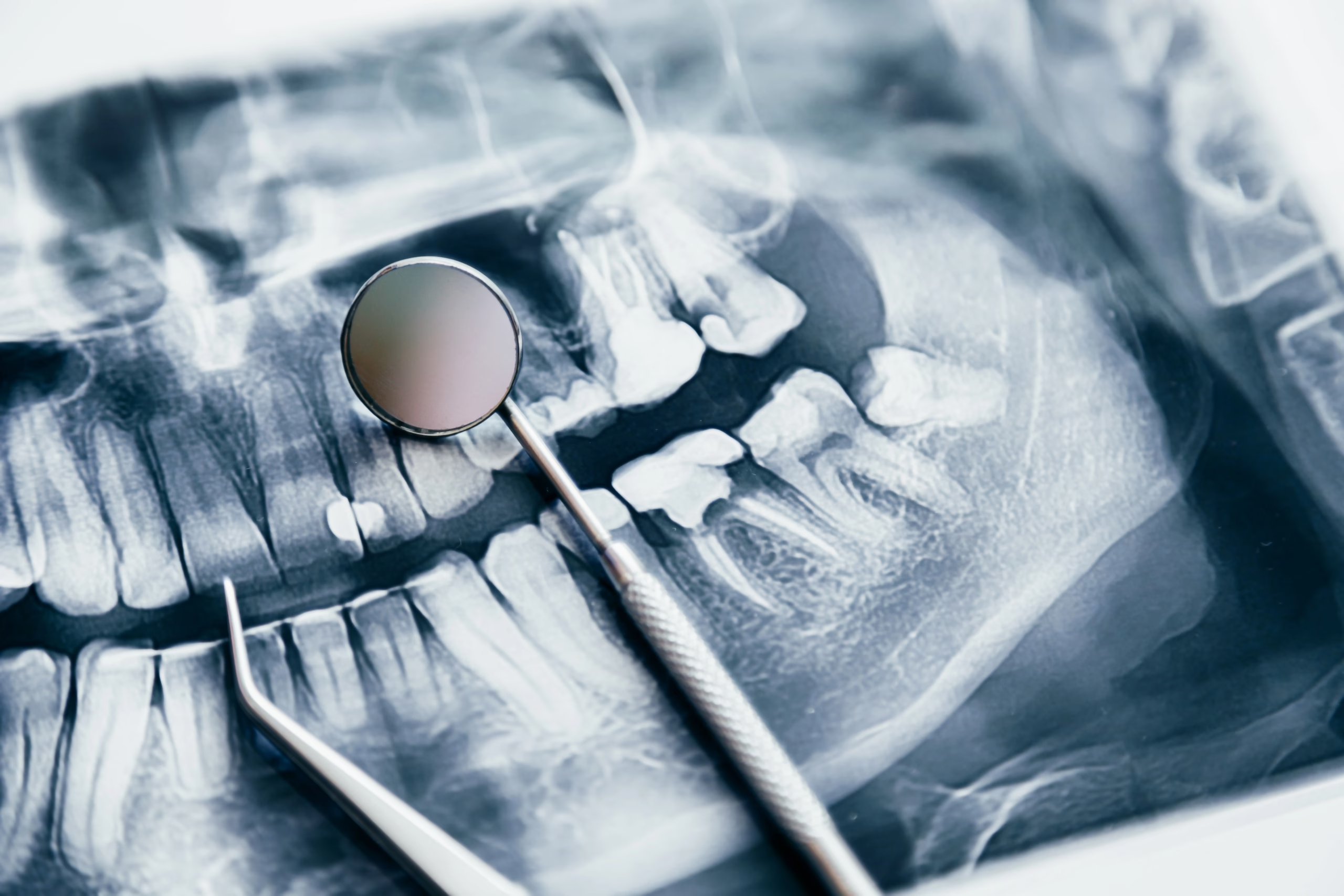
We begin by reviewing your symptoms and medical history, then we examine the area and obtain digital imaging if needed.
We evaluate whether the tooth can be restored and discuss anesthesia, sedation, and treatment options before moving forward.
A good emergency visit should still feel organized. You deserve clarity even when the situation feels urgent.
When Is Emergency Dental Surgery Needed?
Emergency dental surgery may be necessary when a tooth cannot be predictably saved because of:
- Extensive decay
- A vertical root fracture
- Severe mobility
- Advanced infection
- Traumatic damage
Extraction is recommended when saving the tooth is no longer predictable or safe. The most conservative option is the one that protects the patient long-term.
Pain Control and Recovery
Comfort planning is part of emergency care.
Local anesthesia is used for most procedures, while nitrous oxide, oral sedation, or IV sedation may be appropriate for some patients.
After extraction, mild bleeding, soreness, and swelling are expected.
Protect the blood clot by avoiding straws, smoking, vigorous rinsing, and strenuous activity during the first few days.
Recovery usually goes better when patients do less than they think they can.
What Comes After the Tooth Is Removed?
Removing the painful tooth solves the immediate problem. Planning the space protects the future.
Depending on your needs, we may discuss socket preservation, a dental implant, a bridge, or a removable partial denture once healing is underway.
FAQs
How do I know if I need an emergency tooth extraction near me?
Severe pain, swelling, fever, drainage, or a badly broken tooth should be evaluated promptly.
Are dental emergencies always treated with extraction?
No. Many teeth can be treated in other ways depending on the diagnosis.
Can an infected tooth be removed the same day?
Sometimes. The decision depends on the severity of infection, your health, and whether extraction is the safest option.
How We Help

At Ridge Oral Surgery, we focus on careful diagnosis before treatment.
We use imaging when needed, explain every recommendation, discuss comfort options, and recommend extraction only when it is truly appropriate.
You should not have to make confusing decisions while you are in pain.
If you are looking for emergency tooth extraction near you, our goal is to bring clarity, comfort, and a plan that protects what comes next.