“My bridge has been around for years, but why do I suddenly feel differently about it?”
This is how the discussion usually begins. Bridges that have long been considered reliable start to feel like they trap food, causing discomfort or making one wonder what lies ahead for them.
The good thing about this is that just because something changes doesn’t mean anything is wrong. In this guide, we explore when it may be time to explore dental implants.
When an Older Bridge Starts Feeling Like a Question
Most people don’t come in because their bridge suddenly broke.
Usually, it’s something smaller.
Food starts getting stuck in places it never used to. The bridge feels a little different when chewing. Maybe a dentist mentions something during a routine visit, and suddenly a restoration you’ve barely thought about for years becomes something you’re paying attention to again.
That doesn’t mean there’s a problem. It just means it’s worth taking a closer look.
A bridge that has served you well for years can still change over time, and understanding those changes is often the first step toward deciding what comes next.
What Is a Dental Bridge and Why Do Bridges Age Over Time?
A dental bridge fills the space left by a missing tooth by relying on neighboring teeth for support.
Like anything in the mouth, bridges experience wear over time. The bridge itself may still look fine, but the teeth supporting it can develop problems. Gums can recede. Bite forces can change. Small issues can develop slowly enough that they’re easy to miss.
Sometimes the bridge isn’t failing at all. Sometimes it’s everything around it that’s changing.
Signs Your Older Bridge May Need Attention
Most bridge problems don’t announce themselves with severe pain. More often than not, patients notice little things first.
Maybe food gets trapped underneath more often. Maybe the gums bleed when brushing. Maybe there’s sensitivity around one of the supporting teeth.
Some patients notice a strange taste. Others notice the bridge doesn’t feel quite as stable as it once did.
Small changes matter because they often show up before bigger problems do.
When Can a Bridge Be Repaired or Replaced?
One of the biggest misconceptions is that an older bridge automatically needs to be replaced. That’s not always true.
If the supporting teeth remain healthy and the bridge is still functioning well, repair or replacement of the existing restoration may be all that’s needed.
The important question isn’t how old the bridge is. The important question is why it’s causing concern in the first place.
When It May Be Time to Consider an Implant Instead of Another Bridge
Sometimes the conversation shifts from saving a bridge to replacing it.
This often happens when supporting teeth have significant decay, repeated problems, or no longer provide a reliable foundation.
Patients are often surprised to learn that the decision isn’t really about the bridge. It’s about the health of what’s supporting it.
When those supporting teeth are compromised, dental implants may become an option worth exploring.
Bridge vs. Implant: What Is the Main Difference?
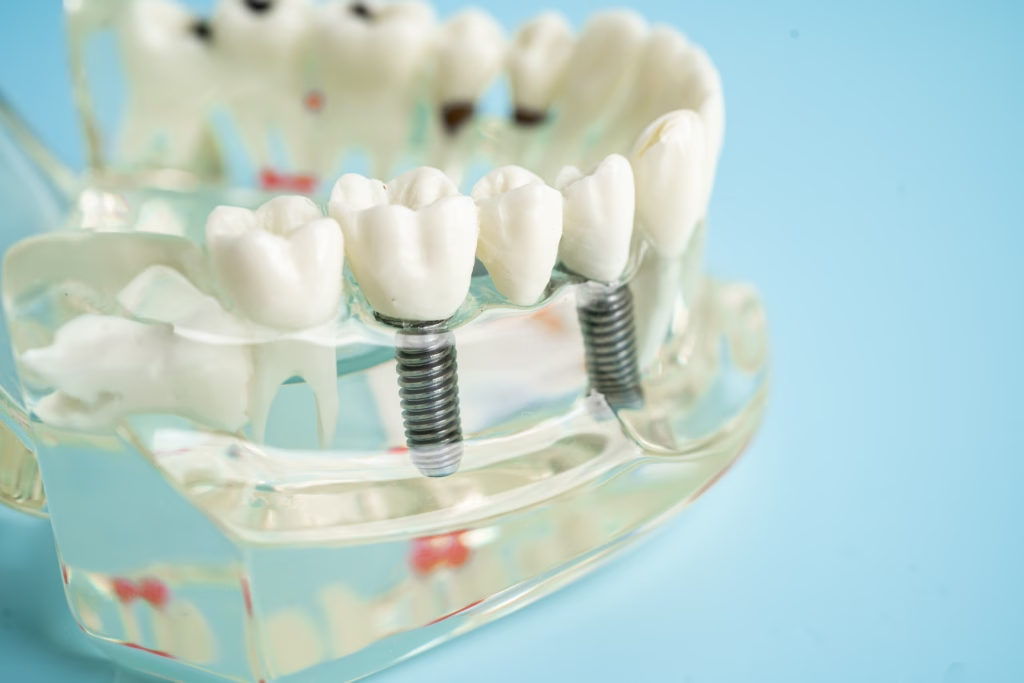
The simplest way to think about it is this:
- A bridge replaces the visible gap.
- An implant replaces the gap and the missing root.
That difference affects how forces are distributed when chewing and how the area is supported over time. Neither option is automatically better.
The right choice depends on your specific situation.
Options for Tooth Replacement After Extraction
If a supporting tooth needs to be removed, patients still have options.
A traditional bridge, a removable partial denture, a single-implant crown, or an implant-supported bridge may be a possibility. This is why planning matters.
The decisions made immediately after an extraction can affect future treatment options.
What If You Need Bone Grafting First?
Nobody gets excited when they hear the words “bone graft.” Patients often assume it means something has gone wrong. In reality, it’s usually just part of the planning process.
Bone naturally changes after a tooth has been missing for a long time. A graft may simply help create the support needed before implant placement.
Think of it as preparing the foundation before building on it.
The Tooth Implant Process
At Ridge Oral Surgery, the process usually starts with an examination and imaging.
From there, treatment depends on what the area needs. Some patients move directly to implant placement. Others need extraction, grafting, or time to heal first.
The part many patients find frustrating is the waiting. Healing takes time.
But that’s also one of the reasons dental implants can be so successful in the long term.
How to Know Whether Your Bridge Should Stay or Be Replaced
There isn’t a simple formula.
A bridge that’s been in place for years may still have plenty of life left. Another bridge may look fine on the surface, but it has underlying issues that deserve attention.
The best decision comes from understanding what’s happening beneath the surface of the restoration, not from guessing.
FAQs
How do I know if my bridge is failing?
Food trapping, sensitivity, gum irritation, looseness, or changes when chewing are all reasons to have it evaluated.
Can an old bridge be replaced with an implant?
Often, yes. The health of the supporting teeth, gums, and bone will help determine whether it’s the right option.
Are implants always better than bridges?
No. Both treatments have advantages. The right choice depends on your oral health and treatment goals.
What if I need a tooth removed first?
You may still have several replacement options available, including dental implants.
An Older Bridge Is a Reason to Evaluate, Not Panic

At Ridge Oral Surgery, we start by understanding the foundation before discussing treatment.
That means evaluating the bridge, the supporting teeth, the bone, and the overall health of the area. Only then can we determine which option makes the most sense.
Most people don’t need to panic when a bridge starts feeling different. They just need answers.
Whether the solution is to maintain the bridge, repair it, or explore dental implants, the goal remains the same: protecting long-term oral health.
Schedule a consultation to evaluate your bridge, explore implant and grafting options, and create a treatment plan before small concerns become bigger problems.