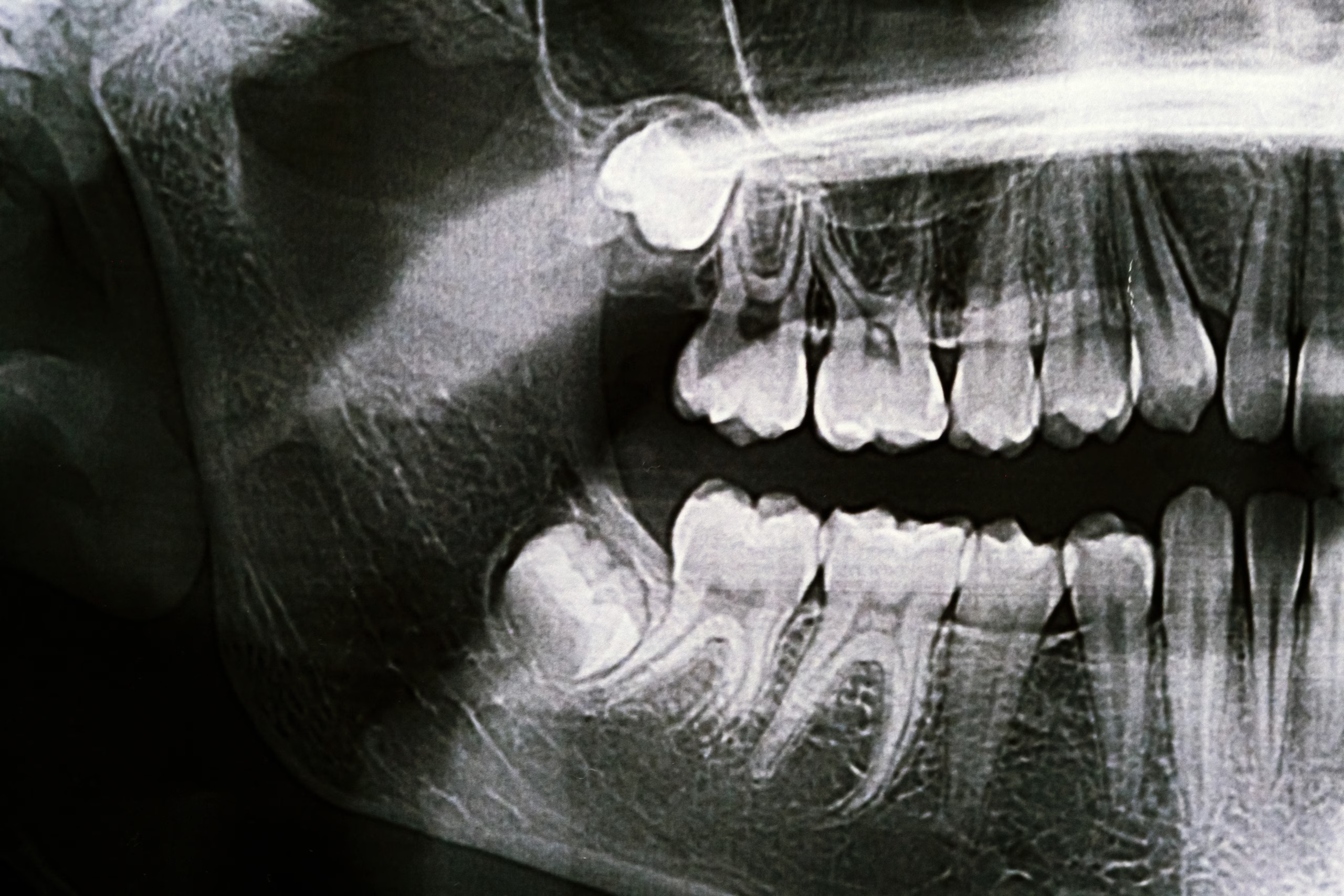
“Do I really need my wisdom teeth removed if they don’t hurt?”
It is one of the most common questions we hear. And the honest answer is: not always.
Wisdom teeth can cause problems, but they do not automatically need to be removed. Some grow into a healthy position and stay that way. Others become trapped, are difficult to clean, or are harmful to the surrounding teeth.
Pain is not the only thing we look for. The position of the tooth, its development, the condition of the surrounding gums, and what we see on an X-ray all help determine what should happen next.
For some patients, that means removal. For others, regular monitoring may be enough. In this guide, we explore how to navigate wisdom teeth.
Wisdom Teeth Removal: When Is It Actually Necessary?
We look at the condition of each tooth before recommending wisdom teeth removal.
A wisdom tooth may be able to stay if it has fully erupted, has enough room, functions normally, and can be cleaned properly. Healthy gums and the absence of decay or infection are also important.
Removal may be recommended when a tooth is impacted, infected, decayed, repeatedly inflamed, or causing damage to the adjacent molar. An X-ray may also show a cyst, changes in the surrounding bone, or a position that could create problems later.
Age can be part of the discussion, but it does not decide on its own. The condition and position of the teeth matter more.
Signs It May Be Safe to Wait and Monitor
Not every wisdom tooth needs immediate treatment.
Monitoring may be reasonable once the tooth is fully erupted and well positioned. We also want to know that you can reach it with a toothbrush and floss and that the surrounding gums are healthy.
There should be no decay, repeated infection, or signs that the tooth is affecting the molar in front of it.
If everything looks stable, your dentist or oral surgeon may recommend keeping an eye on the tooth rather than removing it right away.
That does not mean forgetting about it. Regular dental visits allow your dentist to check for changes. New imaging may also be recommended when there is a reason to look more closely.
Signs It May Be Time to Act
Pain or swelling around a wisdom tooth should be checked, especially if the problem keeps coming back.
Other signs include:
- Food getting trapped around the tooth
- A bad taste or persistent odor
- Swelling or tenderness behind the molars
- Repeated gum infections
- Tooth decay
- Pressure at the back of the jaw
- Damage to the second molar
- A wisdom tooth that is difficult to clean
Sometimes there are no symptoms at all. An X-ray can reveal an impacted tooth, changes around the roots, or a problem affecting the neighboring molar.
If symptoms keep returning, it is worth finding out why.

When to Get Wisdom Teeth Removed
The right time for wisdom teeth removal depends on what we find during an evaluation.
We consider the tooth’s position, root development, surrounding bone, access for cleaning, and any history of infection. For lower wisdom teeth, we also look at their relationship to the nerves in the jaw. Upper wisdom teeth may be close to the sinus, which can affect surgical planning.
Your personal schedule matters, too. If removal is recommended, planning around school, work, sports, or travel can make recovery easier.
An evaluation can also be helpful when you are not sure whether treatment is necessary. You may find that removal is appropriate, or you may be able to continue monitoring the teeth.
What Makes an Impacted Wisdom Tooth Different?
An impacted wisdom tooth has not erupted into a normal position. It may be trapped beneath the gum or bone, or it may be growing at an angle because there is not enough room.
This can make the tooth harder to clean. Food and bacteria may collect around it, leading to gum inflammation, decay, or infection.
An impacted wisdom tooth can also affect the second molar beside it. In some cases, imaging may show a cyst or another change around the tooth.
Impaction does not always mean an emergency. It does mean the tooth deserves a closer look.
What an Oral Surgeon Looks for During an Evaluation
An evaluation usually begins with your dental history, symptoms, and an examination of the area.
Imaging provides another important part of the picture. A panoramic X-ray can show the position of the wisdom teeth, their roots, surrounding bone, and nearby structures. When more detail is needed, a CBCT scan can provide a three-dimensional view.
We look at the angle of each tooth, root shape, nerve or sinus location, gum health, and the condition of the neighboring molar.
From there, the recommendation may be continued monitoring, treatment of an existing problem, or removal.
The purpose of the evaluation is to understand what is happening and choose the appropriate next step.
What If You Choose to Keep Monitoring?
If your wisdom teeth are healthy and stable, monitoring may be a reasonable choice.
Keep up with regular dental visits and continue cleaning the area carefully. Let your dentist know if you develop pain, swelling, pressure, food trapping, a bad taste, or difficulty cleaning around the tooth.
Your plan can change if your symptoms or X-rays change.
FAQs
Do all wisdom teeth need removal?
No. Healthy, fully erupted wisdom teeth that function normally and are easy to clean may be monitored.
How do I know if wisdom teeth removal is necessary?
Removal may be recommended when wisdom teeth are impacted, infected, decayed, difficult to clean, or affecting nearby teeth.
Can I wait if my wisdom teeth do not hurt?
Sometimes. An examination and appropriate imaging can help determine whether the teeth are healthy enough to monitor.
When should I search for an oral surgeon near me?
Consider an oral surgeon if your wisdom teeth are impacted, painful, swollen, difficult to clean, close to important structures, or your dentist recommends a specialist evaluation.
Is it better to remove wisdom teeth earlier or later?
There is no single age that is right for everyone. Timing depends on the tooth’s position, development, health, and potential risks.

How We Help Patients Decide Whether to Wait or Act
At Ridge Oral Surgery, we review the position and condition of your wisdom teeth before recommending treatment. If monitoring is appropriate, we explain what to watch for and when the teeth should be checked again. If removal is recommended, we discuss the procedure, sedation options, recovery, and timing with you.
The decision should be based on what your teeth need, not simply on the fact that they are wisdom teeth.
If you have been putting off an evaluation because your wisdom teeth do not hurt, a consultation can tell you whether they are healthy enough to leave alone or whether it is time to consider treatment.