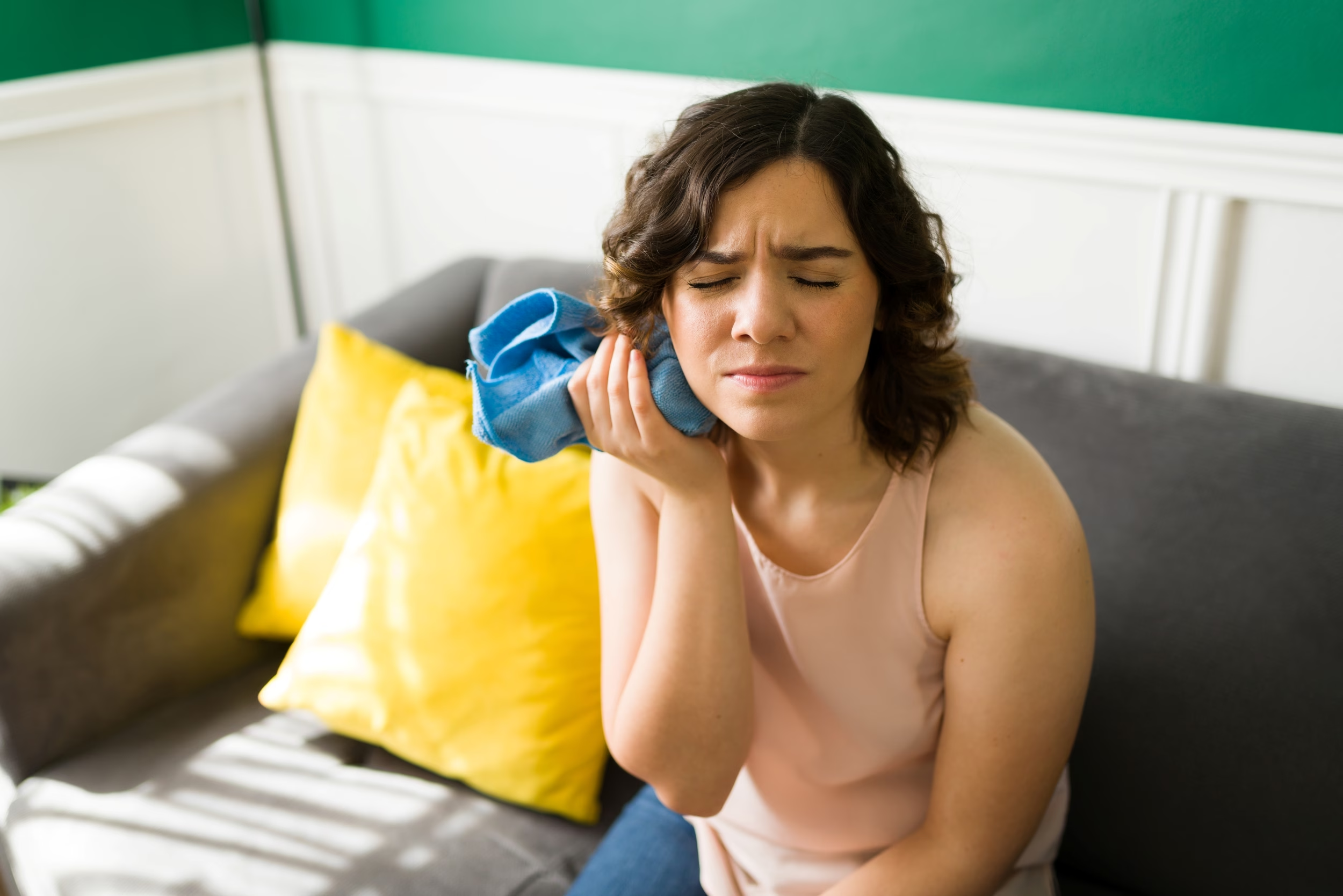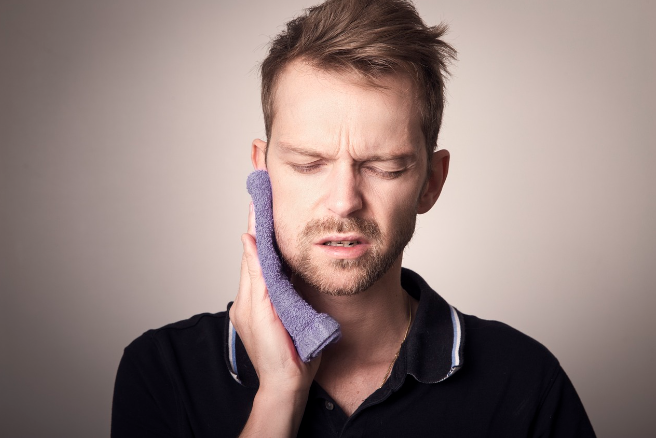
Pain that’s worst the moment you wake and eases over the next few hours is the signature of sleep bruxism — clenching or grinding during sleep. It affects around 13% of adults, and most people doing it have no idea.
The timing is what makes it diagnosable. Tooth decay doesn’t follow a sleep schedule. Sinus pain is worse leaning forward. Pain that’s reliably worst at 7am and gone by lunchtime is coming from muscles that worked all night.
What the morning pattern tells you
| Pattern | Likely source |
|---|---|
| Worst on waking, eases through the morning | Sleep bruxism |
| Builds through the day, worse after chewing | Awake clenching, or a jaw joint problem |
| Constant, unrelated to time | Dental, or something else entirely |
| Worse leaning forward, with congestion | Sinus |
| Sharp, on biting one spot | A tooth — possibly a cracked one |
Awake bruxism is actually more common than the sleep kind — reported at 22% to 31% of adults versus around 13% — but it produces a different pattern. If your jaw is fine in the morning and tight by 4pm, you’re clenching at your desk, not in your sleep.
How to know if you grind at night
Most people find out from a partner or a dentist. The self-check:
- Jaw tightness or soreness on waking
- Headaches at the temples in the morning
- Teeth that feel sensitive or “bruised” first thing
- Flattened, chipped or worn-looking teeth
- Repeated failures of fillings and crowns
- Scalloped edges on the sides of your tongue, or a ridge line along the inside of your cheek
- Jaw muscles at the angle of the jaw that feel enlarged or firm
- Earache with no ear problem
- Disturbed sleep, or a partner who hears grinding
The tongue scalloping and cheek ridge are useful because you can see them yourself — they’re pressure marks from teeth clamped against soft tissue overnight.
What causes it
Not your bite. This is the most persistent myth in the field, and it drives a lot of unnecessary treatment. Recent systematic reviews recommend caution in interpreting occlusal factors in bruxism, and the evidence does not support grinding down teeth or rebuilding a bite as a cure. Be wary of any plan that starts with irreversible adjustment of your teeth.
Stress and psychological factors, particularly for awake bruxism.
Sleep arousals. Sleep bruxism is classified as a sleep-related movement disorder, and episodes cluster around brief arousals from sleep.
Medications and substances. Several drug classes are associated with inducing or worsening bruxism, SSRIs and stimulants among them. Caffeine, nicotine, alcohol and recreational stimulants all contribute. If your grinding started within a few months of a new prescription, mention it to the prescriber — don’t stop anything on your own.
Other sleep disorders. Sleep bruxism is more prevalent in people with obstructive sleep apnea, restless legs syndrome, GERD, REM behaviour disorder and Parkinson’s disease, with sleep arousal proposed as the shared mechanism.
Genetics, and it tends to decline with age.
The sleep apnea question, honestly
You’ll read that grinding is caused by sleep apnea. The evidence is genuinely unsettled.
Some polysomnography studies find high co-occurrence. Others find none: a scoping review concluded that no significant association emerged between obstructive sleep apnea and sleep bruxism in most adult studies, though an association may exist in children. A 2025 international consensus went further and suggested sleep bruxism may be protective against apnea, a position a subsequent systematic review questioned.
What to do with that: don’t assume grinding means apnea, and don’t dismiss it either. If you also snore heavily, wake unrefreshed, stop breathing in your sleep according to a partner, or are sleepy during the day, get screened for sleep-disordered breathing. Treating undiagnosed apnea matters for reasons far beyond your jaw.
Why it’s worth dealing with
Tooth wear, which is cumulative and not reversible. Severe wear can mean losing vertical height in the bite and needing full rehabilitation.
Cracked teeth. Repeated flexing is a leading cause, and cracks frequently don’t show on X-rays — covered in our guide to tooth pain with a normal X-ray.
Failed dental work. Crowns debonding, fillings fracturing, veneers chipping.
Implant overload. Bruxism is correlated with reduced implant survival, as our guide to why implants fail covers. If you grind and are considering implants, say so before planning.
TMD. Bruxism is reported in 45% to 87% of temporomandibular disorder patients, depending on the study.
Muscle hypertrophy, which gradually squares off the lower face.
What actually helps
| Option | What it does |
|---|---|
| Night guard (occlusal splint) | Protects teeth from wear and reduces grinding episodes. Does not cure bruxism |
| Behavioural and stress management | Most useful for awake clenching; relaxation, biofeedback, daytime awareness |
| Reviewing medications | With your prescriber, where onset followed a new drug |
| Reducing caffeine, alcohol and nicotine, especially in the evening | Reduces arousal-driven episodes |
| Treating sleep-disordered breathing | If present — worth screening for |
| Botulinum toxin | Reduces muscle activity; evidence below |
| Physical therapy and heat | Symptomatic relief for sore muscles |
On night guards. Systematic reviews show various splint designs reduce bruxism events, and they reliably protect teeth. What they don’t do is stop you grinding. A guard is a seatbelt, not a cure, and that distinction matters because people get a guard, keep grinding, and assume the problem is solved while the muscle pain continues.
Get one made properly. Over-the-counter boil-and-bite guards fit poorly, and a badly fitting appliance can make muscle pain worse.
On Botox. Four randomised trials have shown botulinum toxin type A reduces the number, duration and peak amplitude of muscle bursts during sleep bruxism episodes, and a systematic review found botulinum toxin and occlusal splints produce similar improvements in the clinical consequences of adult sleep bruxism.
Two caveats worth stating plainly. It’s an off-label use in the US. And it’s temporary — effects wear off over months and treatment has to be repeated. It’s most useful where muscle pain dominates and a guard alone hasn’t resolved it. Botox treatment for jaw muscle pain is available here, but it isn’t where we’d start for most people.
What to try first
Give these two to three weeks before escalating:
- Daytime awareness. Your teeth should only touch when swallowing or chewing. Check yourself hourly. Most people discover they clench far more awake than they assumed.
- Moist heat in the morning, 10 to 15 minutes on the jaw muscles.
- Soft diet during flare-ups. No gum, no bagels, no steak.
- Caffeine curfew after midday, and reduce evening alcohol.
- Wind-down routine. Screens off earlier, consistent sleep timing.
- Jaw position at night. Lips together, teeth apart, tongue resting on the roof of the mouth as you fall asleep.
- Stop chewing pens, nails and ice.
If morning pain persists past that, get assessed.
When it isn’t bruxism
- A jaw joint problem rather than a muscle one. This guide to telling TMJ from tooth pain covers the tests.
- A cracked tooth, which hurts on releasing a bite rather than on waking.
- An impacted or erupting wisdom tooth pressing at the back of the jaw.
- Sinus inflammation, worse leaning forward.
- An infection — swelling, fever, limited opening, or a bad taste mean urgent assessment, not a night guard. See our guide to serious jaw infections.
- Giant cell arteritis in adults over 50: jaw pain on chewing, scalp tenderness, new headache, vision changes. This is a medical emergency, not a dental one.
- Cardiac pain: jaw pain with exertion, chest discomfort or breathlessness. Emergency department.
Common questions
Can I stop grinding?
Sleep bruxism is difficult to stop outright, because it happens during arousals you have no conscious control over. What’s realistic is reducing frequency, reducing muscle pain, and protecting your teeth from the consequences.
Will a night guard fix my headaches?
Often it helps, by reducing both grinding episodes and the force involved. It’s not guaranteed, and if morning headaches persist with a well-fitting guard, the picture needs looking at again.
Is an over-the-counter guard good enough?
As a short-term stopgap, maybe. They fit loosely, wear quickly, and a poorly fitting appliance can aggravate muscle pain. A custom guard lasts years.
Does grinding mean I’m stressed?
Stress is associated, particularly with awake clenching, but it isn’t the whole story — medications, substances, sleep architecture and genetics all contribute. Plenty of people who grind aren’t unusually stressed.
Should I have my bite adjusted?
Not as a first-line treatment. The evidence does not support occlusal factors as a confirmed cause, and bite adjustment is irreversible. Reversible treatments first.
My partner says I grind but I have no pain. Does it need treating?
Possibly, for the teeth rather than the symptoms. If there’s visible wear, a guard is worth it. If there’s no wear and no pain, monitoring is reasonable.
I’m getting implants and I grind. Does that change things?
Yes. Bruxism affects implant planning — number of implants, how force is distributed, the restoration material, and whether a guard is part of the plan from the start. Mention it at the consultation.
Can children grind their teeth?
Commonly, and it often resolves. The sleep-disordered breathing association appears stronger in children than adults, so a child who grinds and snores is worth mentioning to their paediatrician.