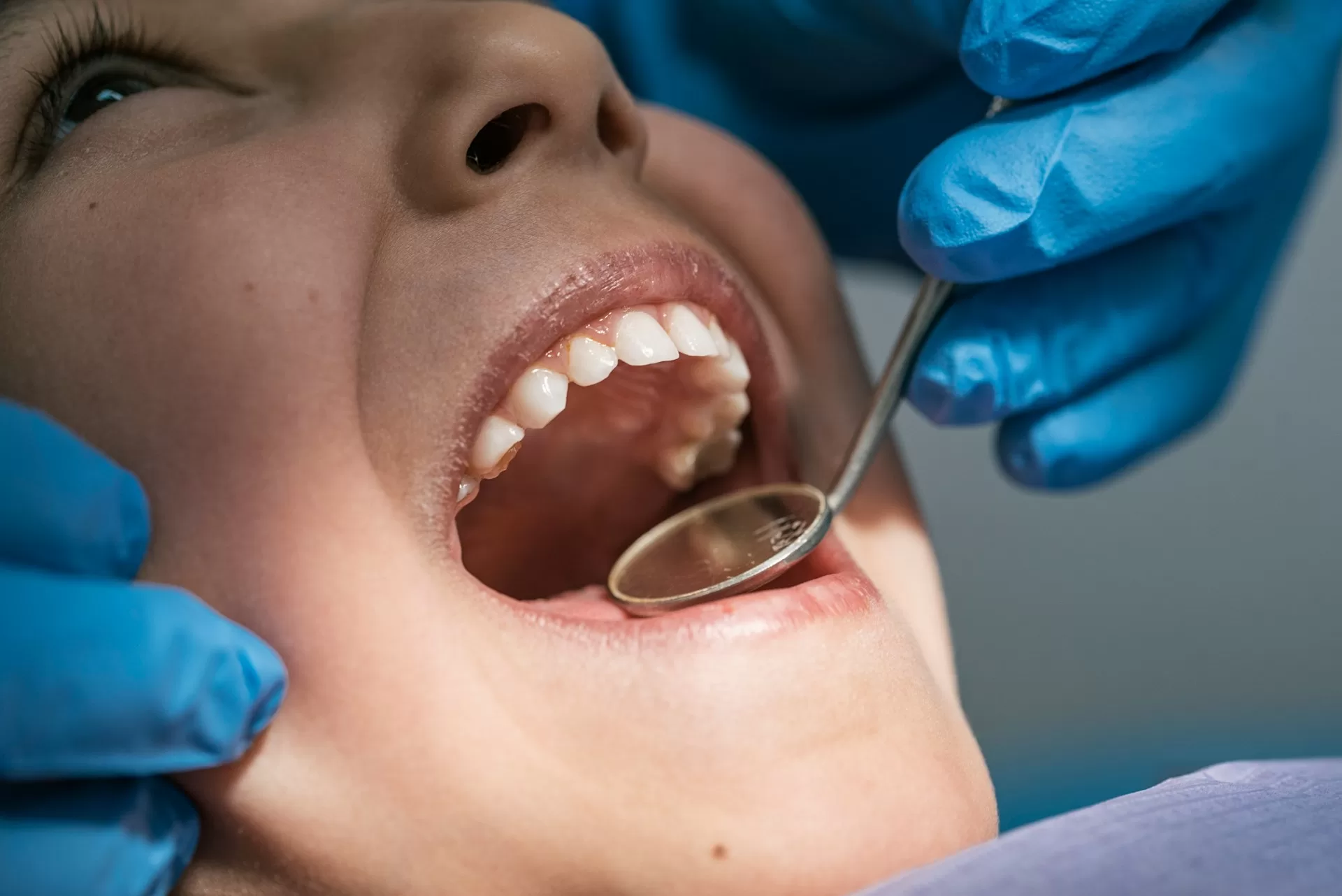
My wisdom teeth don’t hurt, so do I really need to do anything?”
We hear this question often. Patients may delay wisdom teeth removal because they feel fine, have a busy schedule, feel anxious about surgery, or have never been given a clear reason to act.
Delaying treatment often comes from uncertainty about whether removal is truly necessary. The goal is to understand the position and condition of the teeth, identify potential risks, and decide whether monitoring or removal makes more sense.
Why Patients Delay Wisdom Teeth Removal for Years
Most patients are not avoiding care because they do not care. They are often waiting for a clear reason.
No pain can make treatment feel unnecessary. Others worry about sedation, swelling, recovery, cost, or missing work or school. Friends and family may also offer conflicting advice based on their own experiences.
These concerns are understandable. The concern is that changes can develop before pain or other symptoms appear.
Periodic dental examinations and appropriate imaging can show whether a tooth is healthy and functional or poses a risk that is not yet causing symptoms.
Reason #1: “It Does Not Hurt, So It Must Be Fine”
No pain is reassuring, but it is not the same as a diagnosis.
A wisdom tooth can trap food, cause gum inflammation, create a pocket that is difficult to clean, or contribute to decay on the tooth itself or the adjacent molar. In some cases, cystic changes or damage to the neighboring molar may develop without obvious symptoms.
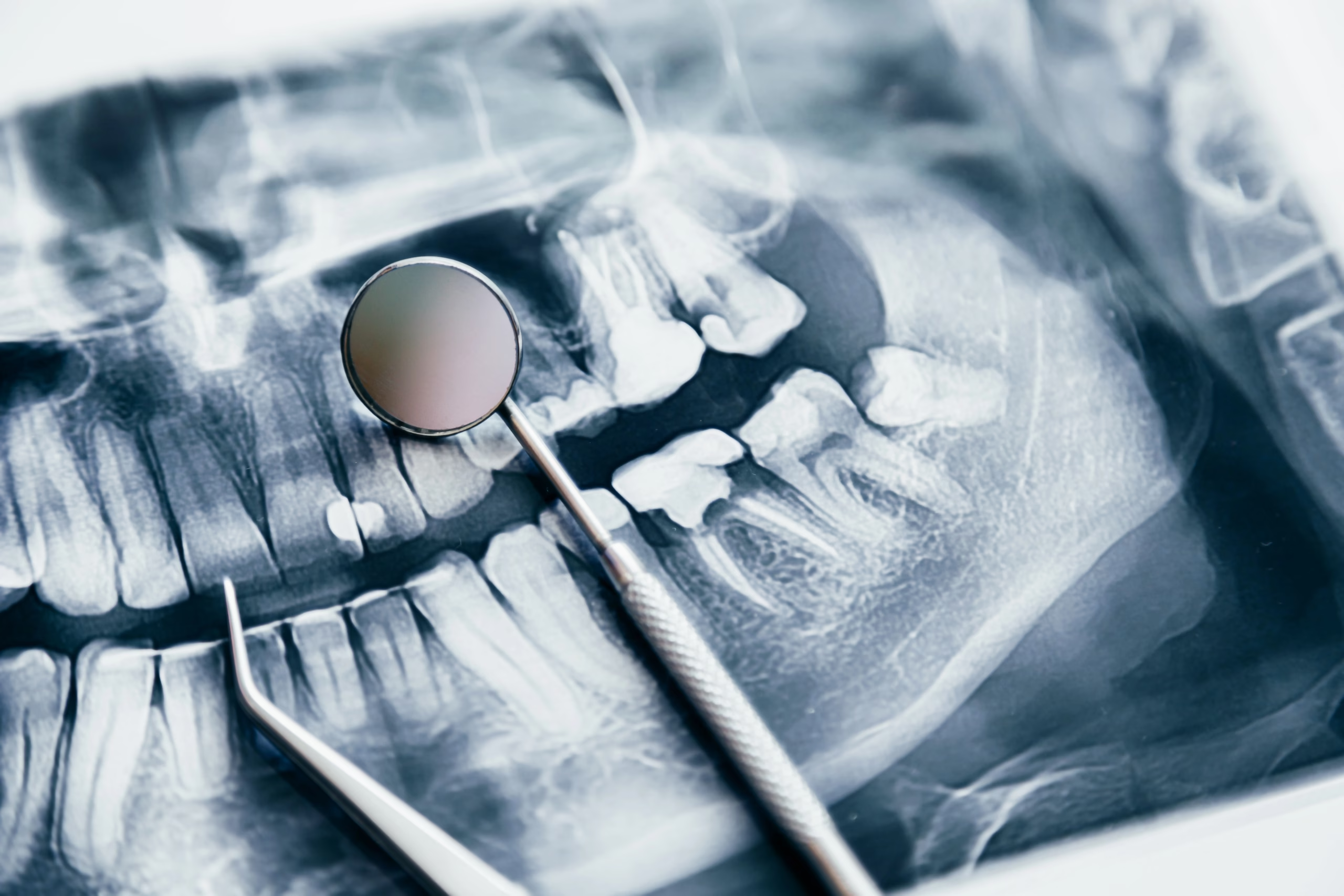
The X-ray often tells a different story.
That does not mean every symptom-free wisdom tooth needs to be removed. Healthy, fully erupted, functional teeth that are easy to maintain may be monitored. The important part is knowing which situation you are dealing with.
Reason #2: Fear of the Procedure, Sedation, or Recovery
For some patients, the biggest obstacle is not the tooth. It is imagining what treatment will feel like.
Anxiety often grows when the plan is unclear. During an evaluation, we review the imaging, explain what the procedure involves, discuss appropriate comfort and sedation options, and outline what recovery may look like.
Patients often feel better once they know what will happen, what they may experience, and how recovery will be managed.
Reason #3: Life Keeps Getting in the Way
College, a new job, travel, sports, family responsibilities, and major deadlines can lead you to delay your decision about surgery.
Life may be busy, but changes in the teeth and surrounding tissues can still happen over time. A planned delay is different from an ignored delay. If monitoring shows that the teeth remain stable, treatment can sometimes be scheduled around a calmer period rather than during an already demanding season.
The key is knowing what is being monitored while you wait.
What Usually Changes a Patient’s Mind?
Most decisions change when the problem becomes specific.
Pain may begin. The gums behind the molars may swell. Food may become trapped repeatedly. A bad taste or odor may develop. A dentist may see decay, bone changes, or an unfavorable tooth position on an X-ray.
Others choose treatment before a major trip, college semester, or busy work period because they would rather address the risk on their own schedule.
An X-ray can make the risk easier to understand. For many patients, having specific information about the tooth makes the decision easier.
When to Get Wisdom Teeth Removed: Signs It May Be Time
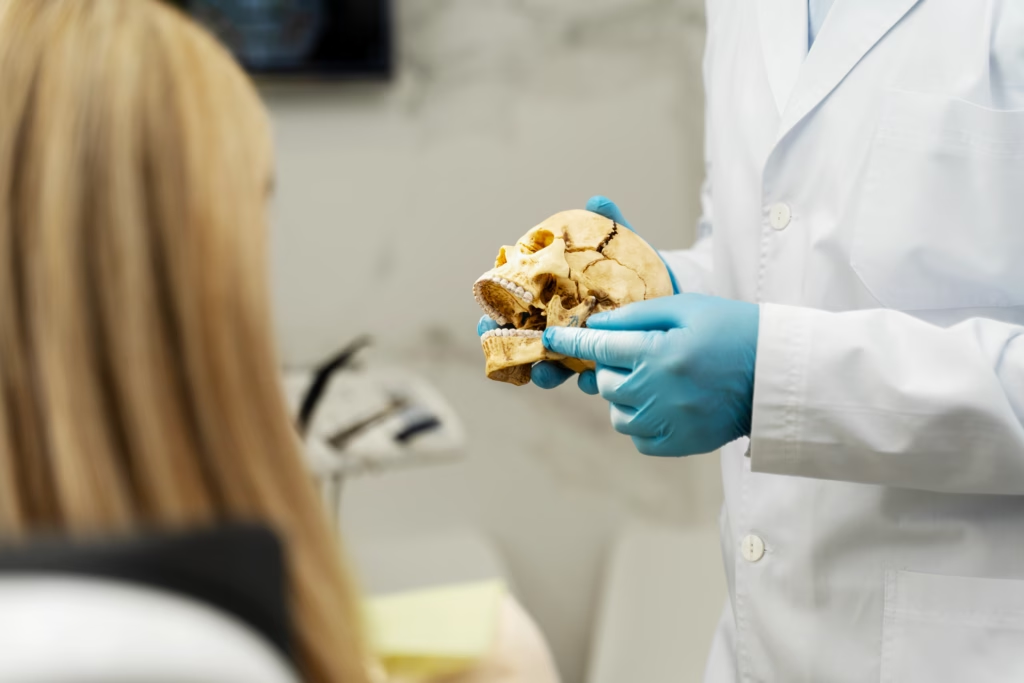
There is no single age that determines when to get wisdom teeth removed. The decision depends on the individual tooth and the surrounding anatomy.
You should consider treatment when there is:
- Pain or pressure behind the molars.
- Gum swelling or repeated inflammation.
- Infection or drainage.
- Decay.
- Damage to the second molar.
- Cyst formation.
- An unfavorable eruption angle.
- Difficulty keeping the area clean.
Timing is not based on age alone. The right time is when the risk of keeping the tooth outweighs the benefit of leaving it alone.
What Happens If an Impacted Tooth Is Left Alone?
An impacted wisdom tooth is one that cannot fully erupt into its expected position because it is blocked by bone, gum tissue, or another tooth.
Impaction is not automatically an emergency, but it is not something to ignore. Depending on its position, an impacted tooth can lead to infection, decay, gum problems, cysts, bone changes, or damage to the adjacent molar.
The concern is not only the wisdom tooth itself. It is what it may do to the tooth beside it.
Some impacted teeth can be monitored, but monitoring should be based on regular evaluation rather than simply waiting for pain.
Is It Harder to Remove Wisdom Teeth Later in Life?
Wisdom teeth can sometimes become more complex to remove later in life, but age is only one factor.
Root development, bone density, tooth position, nerve proximity, infection history, and overall health can all influence the complexity of treatment. Some adults have straightforward extractions, while others require more detailed planning.
What an Oral Surgeon Looks for During a Wisdom Teeth Evaluation
We review your medical and dental history, symptoms, and imaging. Depending on the case, panoramic X-rays or CBCT imaging may help us assess tooth angle, root shape, nerve position, sinus proximity, infection risk, and the health of nearby teeth.
From there, the plan may be to monitor the teeth, remove one or more, treat an infection first, coordinate with orthodontic care, or schedule treatment around work, school, or travel.
The decision should be based on anatomy, symptoms, and future risk.
What If You Decide to Keep Monitoring Them?
Monitoring is a plan only when someone is actually watching the tooth.
That may include regular dental examinations, updated imaging when recommended, gum-health checks, and attention to changes such as pain, swelling, bad taste, or repeated food trapping.
The decision can change as the mouth changes.
FAQs
Is it bad to delay wisdom teeth removal?
Not always. Some healthy wisdom teeth can be safely monitored, but delaying evaluation without an evaluation may allow decay, infection, cysts, or damage to nearby teeth to develop unnoticed.
How do I know when to get wisdom teeth removed?
Pain, swelling, infection, decay, poor eruption, damage to nearby teeth, or recurrent inflammation may indicate that treatment is warranted.
Can an impacted tooth stay in place forever?
Sometimes, but it should be monitored. An impacted tooth can develop problems over time even when it is not currently painful.
Do wisdom teeth always need to be removed?
No. Healthy, functional wisdom teeth that are easy to clean may not require removal.
Why did my dentist recommend removal if I have no pain?
Your dentist may have identified a risk on imaging, such as impaction, decay, cyst formation, poor access for cleaning, or damage to a nearby tooth.
How We Help Patients Decide Without Pressure
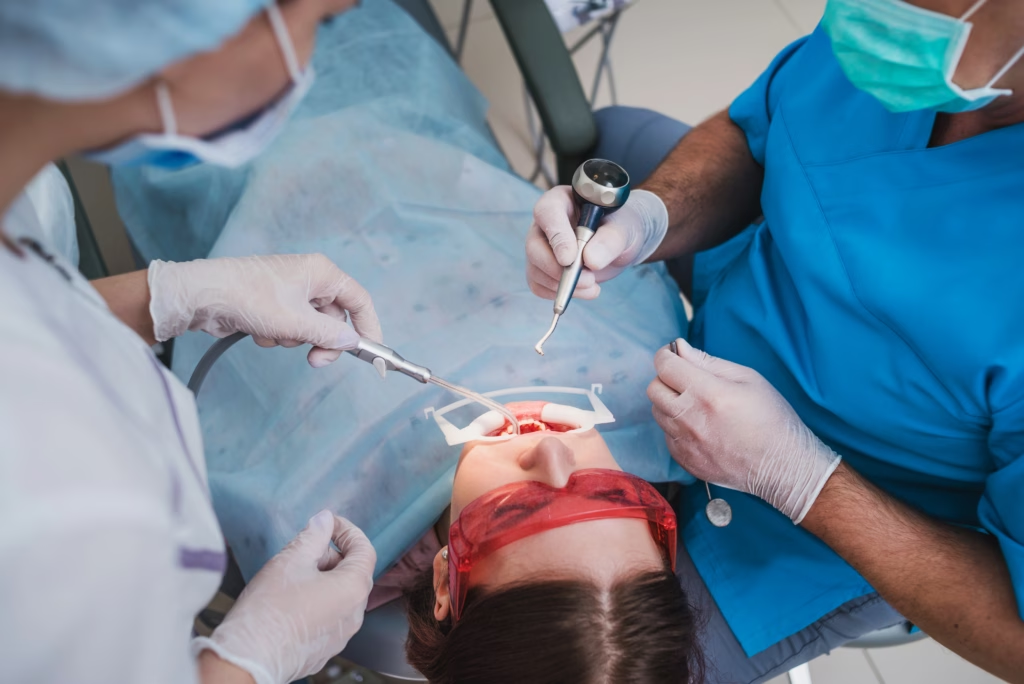
At Ridge Oral Surgery, our role is not to pressure patients into surgery. It is to help you understand whether monitoring or removal makes sense for your situation. We review your symptoms and imaging, explain your options, and answer your questions before treatment is planned.
Not sure whether your wisdom teeth should be monitored or removed? Schedule a consultation with Ridge Oral Surgery for clear guidance tailored to your symptoms, imaging, and individual needs.