You need oral surgery and have been asked to quit smoking. We understand your frustration.
If you are a regular smoker, being asked to quit temporarily can be annoying. But in the case of oral surgery, skipping cigarettes for a short time does make a massive difference in how well you recover.
Even smoking one cigarette, earlier than recommended, can set things back. It can hurt circulation, amplify pain, and increase your risk of infection. We are not here to police your behavior. We are here to help you recover as smoothly and safely as possible.
In this post, we’ll discuss how smoking impacts your recovery, how long you should wait before resuming it, and what you can do if quitting altogether is not an option at the moment.
Whether you’ve had a wisdom tooth or an implant, smoking following tooth extraction can slow down your recovery. Let’s review what you need to know to continue healing uninterrupted.
Why Smoking and Oral Surgery Don’t Mix
Your body requires strong blood flow and lots of oxygen to heal properly following oral surgery. Smoking interferes with that. It constricts blood vessels, reduces circulation, and restricts the oxygen that your tissues require to heal.
Nicotine and tobacco poisons also disrupt the body’s process of developing healthy blood clots. Smoking also delays bone healing, influences how implants integrate, and prevents your gums from closing optimally.
This makes it more likely for complications such as dry socket, infection, delayed swelling or bleeding, and even implant failure to occur.
To ensure the best possible chances at a smooth recovery from oral surgery, quitting smoking is one of the most crucial things you can do.
The Risk of Dry Socket After Tooth Extraction
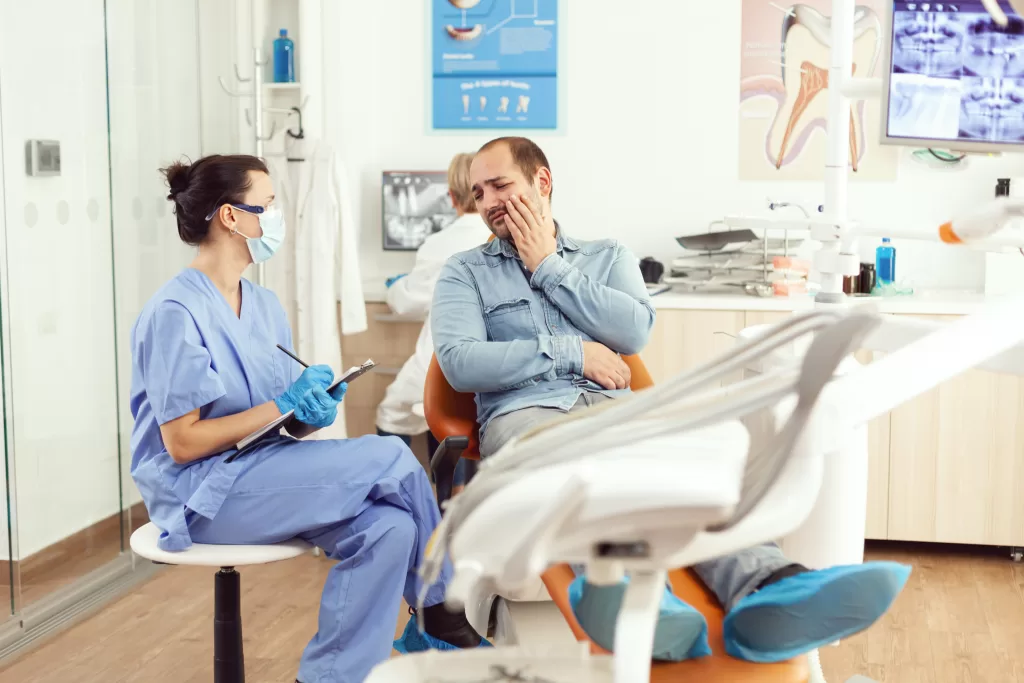
Now, let’s discuss one of the most frequent (and painful) side effects of having a tooth pulled, dry socket. This occurs when the covering blood clot doesn’t form or is knocked off too early, leaving the bone and nerves exposed. This can slow healing, produce severe pain that tends to refer to the ear or jaw, and more.
One of the primary triggers? Suction. Inhaling while smoking or vaping can easily disrupt the clot before the area is ready.
If you develop increasing pain several days post-op, along with a bad taste or odor, it’s time to call your surgeon.
How Long Should You Avoid Smoking After Oral Surgery?
We understand how difficult it is to take a break from smoking, but allowing your body time to recover is extremely crucial after oral surgery. Even taking one puff too soon will hamper recovery and create serious complications.
The duration you have to wait depends on the procedure.
- For a basic tooth removal, do not smoke for a minimum of 72 hours.
- For surgical extractions like wisdom teeth, wait for a minimum of 5 to 7 days.
- If you’ve had dental implants or bone grafting, it’s best to wait about 1 to 2 weeks; the longer, the better.
Heat, nicotine, and suction can interfere with healing and lower blood flow in smokers. Although smoking may not seem to be damaging, even a single puff can be risky.
Smoking after tooth extraction is the most common reason for dry socket and also compromised healing for all postoperative problems.
Strategies for Minimizing Risks of Smoking During Recovery
At Ridge Oral Surgery in New Jersey, we understand that quitting smoking overnight is no easy feat. If quitting altogether is not on the horizon yet, we can still guide you through oral surgery recovery without a problem. A few precautions can go a long way towards safeguarding your recovery.
First, try to use nicotine patches to suppress cravings; they are safer than lozenges or nicotine gum since they cannot dislodge surgical sites. Avoid using anything that uses suction, such as vape pens or drinking straws, as they can dislodge the clot and delay healing.
Instead, reach for sugar-free gum or herbal mints to keep your mouth busy. Drink plenty of water and remember to do saltwater rinses or follow other post-op directions from your surgeon.
Even a quit plan can be of great help. Allowing your body a smoke-free time to recover fully is one of the best ways of preventing complications such as dry socket and prolonged recovery.
How We Support at Ridge Oral Surgery
At Ridge Oral Surgery, we do not judge. Instead, we are committed to making your healing experience smooth through practical and personalized care that addresses your specific needs.
For all smoking patients, we’ll walk you through personalized postoperative care and provide extra protection, if necessary, like medicated dressings or socket gel to avoid dry socket. We’re happy to coordinate with your physician on all aspects of your recovery as well.
Whether you’re going in for a tooth extraction or a full mouth reconstruction, we prioritize safe, informed oral surgery recovery. And with locations in Warren, Morristown, and Bridgewater, NJ, skilled assistance is always available.
Ready to take the next step? Book your consultation today and get one-to-one support for a more comfortable, easier healing process.