New Year’s resolutions often begin with the gym, but your smile does more heavy lifting day in and day out than any workout plan. We use it to talk, eat, and express ourselves, often without realizing how much care that truly requires. That is why the start of the year feels like the right time for a thoughtful reset built on simple habits that add up.
A fresh start with consistent oral hygiene begins with small habits that protect your jaw, teeth, and implants over time. When these routines become second nature, they help support jaw comfort, preserve the natural teeth, and keep the implant stable. In this blog, we will share daily and weekly habits you should inculcate in 2026.
Why New Year Habits Matter More Than ‘Perfect’ Dental Care
When it comes to dental care, doing things perfectly matters far less than doing them consistently. We see this all the time: simple habits done every day quietly protect your smile far better than intense routines that last a week and disappear.
Strong oral hygiene helps prevent inflammation and control bacteria around the gums and implants. Easy, realistic flossing tips, followed regularly, help prevent buildup in areas that brushing misses. Over time, the result is a reduction in gum disease symptoms, support for a balanced bite, and reduced stress on the jaw that may otherwise spur clenching or discomfort. The goal is not perfection, but a routine you can live with for years.
Habit #1: Build a Two-Minute Brush Routine That Actually Works
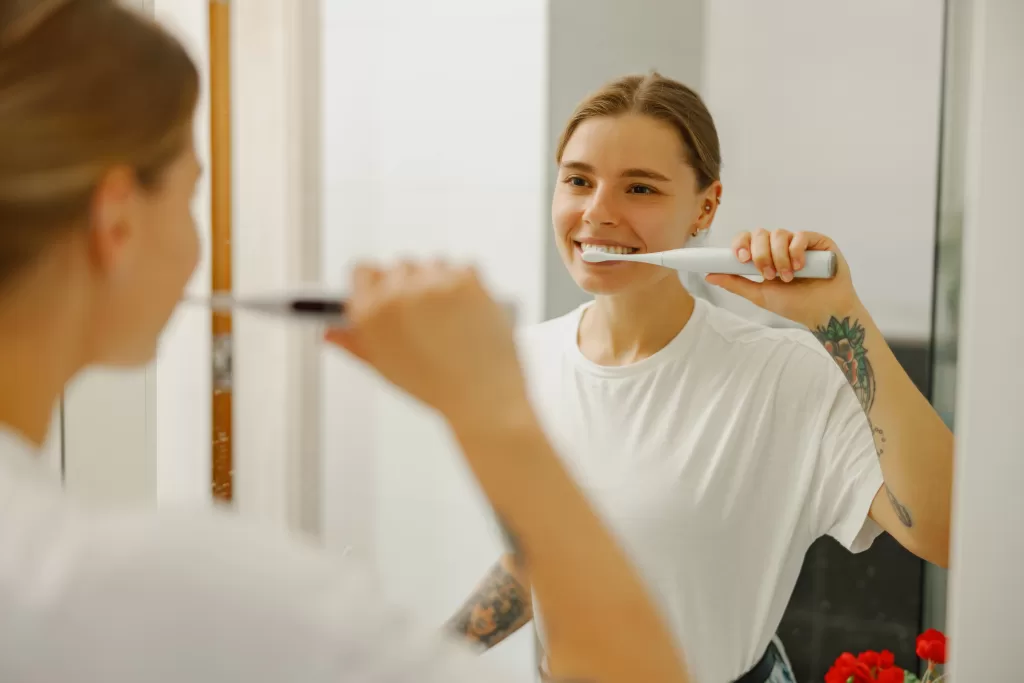
The actual brushing that works is less about effort and more about technique. We always recommend keeping it simple and intentional.
Aim the bristles gently toward the gumline, apply light pressure, and move slowly rather than scrubbing. For most patients, a soft brush or an electric option works when the head is replaced on schedule. Brushing after breakfast and before bed supports consistent oral hygiene, but if you have had something acidic, a quick rinse first is a smarter move.
Adding tongue cleaning is an easy extra step that helps control bacteria and keeps breath fresh.
Habit #2: Floss Like You Mean It
Flossing should not be aggressive; when done properly, it should be controlled and comfortable. Our best flossing tips are really straightforward: slow down, hug the tooth, and make it a non-negotiable every night.
Curve the floss into a C shape and slide it just under the gumline, not snapping. Flossing before brushing at night helps remove plaque where a toothbrush cannot reach and supports good oral hygiene. If traditional floss feels like a nimble challenge, interdental brushes, water flossers for implants or bridges, or threaders can make the habit easier while preventing irritation and early signs of gum disease.
Habit #3: Protect Your Jaw With Smart Bite Habits
Your jaw often carries stress before you even notice it. Clenching, grinding, morning headaches, or a tight feeling along the jawline are common signs.
A few bite-friendly habits can go a long way. We recommend keeping your teeth apart when resting, with your lips closed and your jaw relaxed. Avoid chewing ice, pens, or hard candy; it adds unnecessary pressure.
If you grind at night, a nightguard is important, especially with implants. These habits support balanced bite forces, protect long-term oral hygiene, and help prevent tension that can worsen gum disease symptoms or interfere with consistent flossing routines.
Habit #4: Eat and Drink Like Your Enamel (and Implants) Matter
What you eat and drink all day long really does matter more than most people think. Constantly sipping coffee, sparkling water, wine, or sports drinks keeps your enamel under stress.
We suggest spacing out those drinks and choosing healthier snacks, such as cheese, yogurt, crunchy vegetables, or nuts, when safe for your restorations. After something sweet, a quick rinse with water or chewing sugar-free gum helps rebalance your mouth’s saliva. These small choices support better oral hygiene, help limit gum disease symptoms, and make your daily flossing more effective, especially when protecting dental implants.
Habit #5: Book Prevention Before You Feel a Problem
Waiting until a problem hurts is rarely the smartest approach. Scheduling preventive visits in advance of a problem is a quiet luxury that protects comfort and long-term results.
Regular checkups and cleanings help preserve healthy tissue and catch small changes early, when they are easier to manage. Ongoing professional care is not optional for implant patients. Monitoring the surrounding tissue and bite forces helps keep implants stable over time. Regular visits will support strong oral hygiene, catch early gum disease symptoms, and ensure your everyday habits, including practical flossing tips, are working for you rather than having to play catch-up later.
Don’t Ignore These Gum Disease Symptoms
If your gums bleed when you brush or floss, don’t just ignore it, and the same goes for persistent bad breath that won’t go away. Keep an eye out for puffy, tender gums, a “longer teeth” look from gum recession, or teeth that feel slightly loose or a different-feeling bite.
Recognizing gum disease symptoms enables you to act early, before the bone support is compromised. Fortunately, inflammation is far easier to reverse when caught early. By paying attention to these signs, along with consistent oral hygiene and some practical flossing tips, you can protect your smile, comfort, and long-term oral health.
A Simple Weekly ‘Smile Reset’ Routine
A weekly smile reset doesn’t have to feel like another chore. You can stay ahead of little issues before they become big ones in about ten minutes. Give a quick glance at your gums for any bleeding or swelling, check whether your brush head appears worn, and clean your retainer or nightguard thoroughly. Restock now while you’re thinking about it, so you can stay on track with flossing or interdental brushes later.
Habit stacking makes all the difference. Floss while the water’s heating up, rinse with some water after coffee, or brush before you start that nighttime skincare routine. In small ways, these check-ins are silently protecting your smile all week long.
Implants Need a Different Kind of Consistency

Dental implants are strong, but they require a different level of consistency. Though implants do not decay, the tissue around them may become inflamed if plaque is left behind. That is why dialed-in oral hygiene is especially important for implants; it is tissue health that protects long-term stability.
At the Ridge Oral Surgery clinic in New Jersey, we recommend correctly sized interdental brushes, a water flosser, and a non-abrasive toothpaste to keep those areas clean without irritation. Bite balance also matters more than many people realize. Implants lack the natural shock absorption of teeth; therefore, clenching or grinding can place extra stress if not addressed early.
Our Approach to a New Year Smile Plan
A smile plan for the new year should not be a generic list but a personalized one. We begin by assessing your individual risk factors, including gum health and bite forces, as well as any past dental or implant work.
From there, we recommend tools and routines that realistically fit your day. When symptoms are already present, we outline specific steps and emphasize conservative treatment wherever possible.
At Ridge Oral Surgery, we help patients protect natural teeth and implants with proactive, comfort-focused care. If you’re experiencing symptoms of gum disease or want a more effective routine, we’ll tailor a plan that fits your life.