Missing teeth are frustrating enough. Figuring out whether you need standard or mini implants can add to that stress. If you are juggling between these two choices, trust us, you are not alone.
It’s a common question, and the truth is, the answer isn’t always simple. What’s right for one person may not be right for another.
At Ridge Oral Surgery, we help patients weigh the benefits of mini dental implants versus full-sized dental implants based on their anatomy, lifestyle, and long-term goals. In this guide, we’ll break down the differences, benefits, and costs, so you can make the call most suited to your needs.
Understanding the Difference Between Mini and Standard Dental Implants
To choose the right option, you need to know the ways in which the two differ. Size is one factor to be considered. But so are the design, function, and awareness of one’s needs. All factors need to be considered to know which option is the better fit for your smile.
Standard dental implants
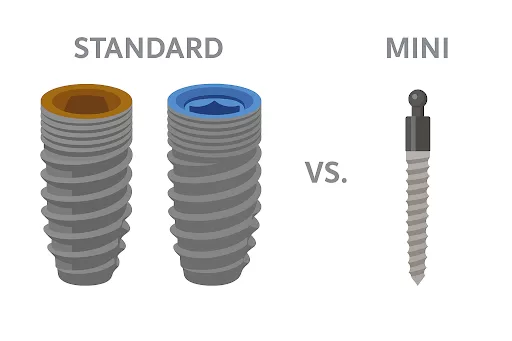
Standard implants are the go-to for most full-tooth replacements. They’re typically 3.5 to 6 mm wide and are placed deep into your jawbone. These implants are strong, long-lasting, and ideal for:
- Single tooth replacements
- Bridges
- Full-arch restorations like implant-supported dentures
They’re made in two parts: a titanium post that integrates with your bone, and a connector (called an abutment) that holds the custom crown.
Mini dental implants
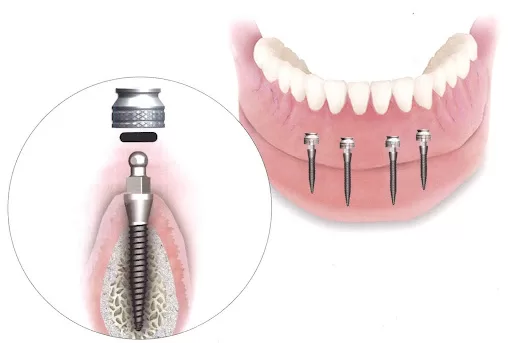
Mini implants, on the other hand, are less than 3 mm in diameter. It’s the best choice if your jawbone is too thin for standard implants, either due to bone loss or natural anatomy.
Unlike standard implants, mini implants are typically a single piece with a small ball-shaped head. They’re most commonly used to secure dentures, especially in the lower jaw, and require less invasive placement.
Pros and Cons of Mini Dental Implants
Mini dental implants can be a game-changer for patients who don’t qualify for full-sized dental implants, but they aren’t right for everyone.
Let’s walk through the upsides and trade-offs so you are aware of the full picture:
Pros
- Less invasive: Smaller incisions ensure quicker procedures and less discomfort.
- Best choice for narrow jaws: Ideal if you have bone loss or can’t undergo complex surgery.
- Faster healing: Less downtime, especially helpful for older or medically sensitive patients.
- Budget-friendly: This is often a more affordable entry point into implant treatment.
Cons
- Not built for heavy bite zones: It may not be strong enough for back molars.
- Lower longevity: They may not last as long as standard implants.
- Limited options: Fewer customizations compared to full-sized implants.
- Less research: Long-term studies are still catching up.
Pros and Cons of Standard Dental Implants
Full-sized dental implants offer unmatched durability, especially for patients who want a permanent solution for missing teeth.
Let’s have a look at their pros and cons:
Pros
- Stronger bite: Built to handle chewing, even in the back molars.
- Well-researched: Backed by years of studies and high success rates.
- Handles complex cases: Suitable even after bone grafts or sinus lifts.
- Versatile: Compatible with crowns, bridges, and full-mouth restorations.
Cons
- Takes longer to heal: Full healing or osseointegration can take months.
- Costs more: A bigger upfront investment.
- Exaggerated procedures: Procedures like bone grafting have to be undertaken alongside the implantation process if your jawbone is too thin.
Cost Comparison: What to Expect
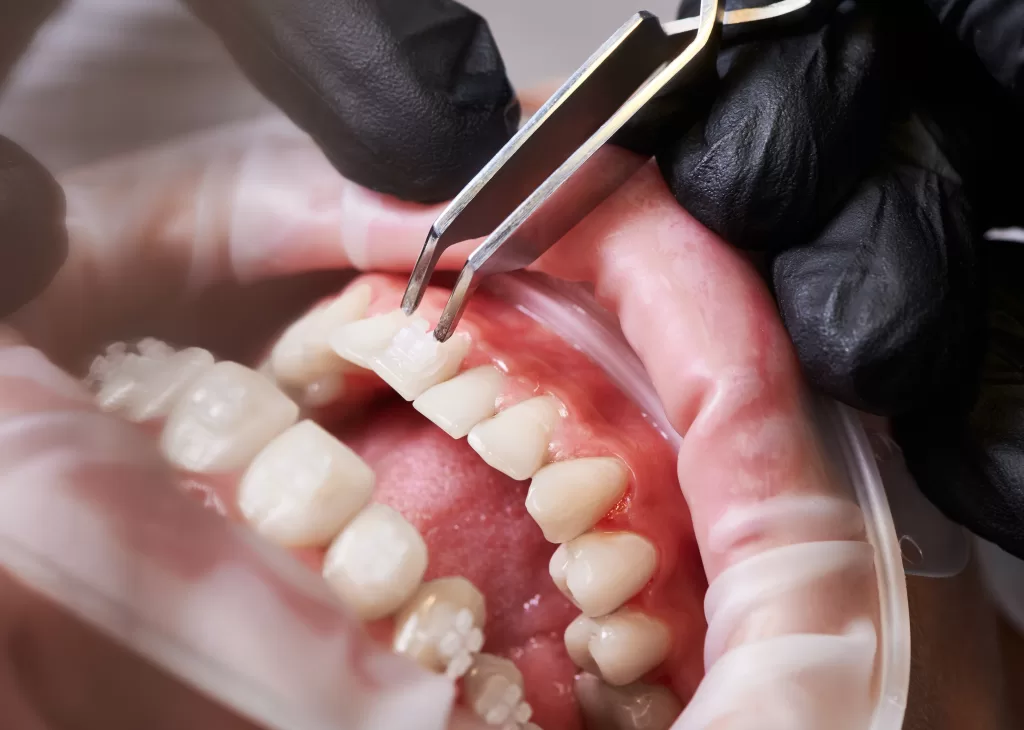
When considering dental implants, the cost is often a big part of the decision, and understanding what you’re paying for can make all the difference.
Average Cost Range
- Mini dental implants: $500–$1,500 per implant
- Standard dental implants: $3,000–$5,000 per implant (includes crown)
These ranges usually cover:
- Consultation and digital imaging.
- Surgical placement of the implant.
- Temporary or permanent restoration (like a crown or denture).
Insurance and Financing
While some dental insurance plans may cover part of the cost, implants are often considered elective. That’s why Ridge Oral Surgery offers you flexible financing options to help make treatment more accessible.
Value Over Time
Though the initial price is higher, standard implants are built to last, offering long-term reliability and value. They support more complex restorations and often require fewer replacements over time. For many patients, this makes them a smart and lasting investment in their oral health.
Which One Is Right for You? A Personalized Approach
There’s no universal answer when it comes to implants. The right choice depends on your bone structure, tooth location, overall health, and even your budget and long-term goals.
For example, a molar that takes heavy bite pressure may need the strength of a standard implant, while a mini implant might be ideal for stabilizing a lower denture in a narrow ridge.
Ridge Oral Surgery offers both mini dental implants and traditional dental implants because no two patients, and no two mouths, are the same. That’s why we use full clinical evaluation and advanced 3D imaging to guide your treatment. We review your options and create a plan that fits you, your smile, and your life.
Why Ridge Oral Surgery Offers Both Implant Options
Every patient is different, and so are their dental needs. That’s why we offer both mini and standard dental implants. Both practices have their benefits, but the right choice depends on your bone health, goals, and your budget.
Using advanced tools like CBCT scans and digital impressions, we plan your treatment with precision. Our surgeons are trained in both techniques to make sure your procedure is comfortable, effective, and built to last.
Whether you’re a candidate for mini dental implants or standard dental implants, our goal is to make your outcome functional, natural-looking, and long-lasting.
If you are still confused about which option you must go for? Schedule a consultation. We’ll review your smile, explain your options, and help you decide what’s right.
We proudly serve Warren, Morristown, Bridgewater, and nearby New Jersey communities. Wherever you’re located, if you’re ready to take the next step, we’re here for you.